
Bronco troupe
The Clarendon Enterprise - Spreading the word since 1878.

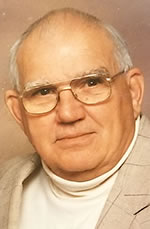
Robert Michael Paul passed away at home on Sunday, March 10, 2019, from myelo-dysplastic anemia syndrome.
Memorial Graveside services with military honors will be held on Saturday, March 16, 2019, at 2:00 p.m. in Citizens Cemetery with Don Stone officiating. Inurnment will follow in Citizens Cemetery.
Visitation will be held from 6-8p.m. on Friday, March 15, at 520 East 3rd Street in Clarendon.
Cremation and Arrangements are under the direction of Robertson Funeral Directors of Clarendon.
Robert Paul was born in Dayton, Ohio, on October 14, 1938. The son of Robert and Ella Mary Sue Paul, Robert was an avid craftsman. He enjoyed working with his hands. Whether it was in the kitchen or in the shop, a masterpiece always appeared. He loved to laugh and make others laugh. Robert was a simple man who loved giving. He gave endless hours to others even in his last moments. He cherished family and friends. When you saw him coming, you always wondered what type of adventure or creation he was going to share with you. His hobbies included scuba diving, fishing, canoeing, camping, and the outdoors. Often you would find him sitting outdoors enjoying nature.
In 1954, Robert followed his father’s lead by earning his Eagle Scout rank saying, “Once an Eagle always an Eagle.” After graduating from Fairview High School in 1957, he attended Saint Elizabeth Radiology Tech School in Dayton.
He then enlisted in the U.S. Air Force where he was stationed at Amarillo Air Force Base as an x-ray technician. While working at Saint Anthony’s Hospital in Amarillo, he met Charlotte, who was a nurse there. On April 4, 1964, he married Charlotte in Clarendon. Shortly afterwards, Robert was deployed overseas to Turkey during Vietnam. When returning stateside, Robert and Charlotte moved to New York where their children Peter and Lauraine were born. Later moving to Edinboro, Pennsylvania, he earned a Bachelor of Arts and Master’s of Fine Art in Jewelry Fabrication from Edinboro University of Pennsylvania. He enjoyed photo-graphy and jewelry making. In 2001, Robert and Charlotte Paul returned to Clarendon.
He was preceded in death by his parents Robert Henry and Ella Mary Sue Paul and a sister Sandra Schwartz.
He is survived by his wife of 55 years, Charlotte Paul of Clarendon, a son Peter Paul and wife Rachel Cohen of Colorado, a daughter Lauraine Paul of Clarendon; a grandson Tyler Paul of Clarendon; a brother-in-law Ricky Rattan of Clarendon, a sister Barbara Paul of Wyoming, along with numerous nieces and nephews.
In lieu of flowers, memorials can be made to Boy Scouts of America 401 Tascosa Road Amarillo, TX 79124 Attention: Memory Lane or Christ’s Kids Outreach Ministries PO Box 45 Clarendon, TX 79226 or save a life by donating blood at your local blood bank.
Family can be reached at P.O. Box 624 Clarendon, Texas 79226.
Sign the online guestbook at www.robertsonfuneral.com
Installation techs bolted seats to the floor of the Mulkey Theatre last weekend as the project moves closer to completion and a gala opening on May 25. More than 200 chairs were mounted over the weekend on the main floor with balcony recliners to be installed in the coming weeks. Click the image for a time-lapse image of the seat installation videoed by Stone Ranch Media.

One lucky shopper will get $500 in Clarendon Cash Thursday, March 14, when the Chamber of Commerce holds its first Totally Locally drawing during its Business After Hours at the Saints’ Roost Museum.
The Business After Hours social encourages Chamber members and other interested folks to network and learn more about what’s happening in the local business community. The event will be held from 5:30 to 7:30 p.m., and door prizes will be drawn for those in attendance.
Refreshments will be served, and the event is planned to be come-and-go to accommodate Chamber members’ busy schedules.
At 6:30 p.m., the first Totally Locally winner will be drawn for 2019. That person does not have to be present to win.
The “Totally Locally” initiative encourages shopping at locally owned and operated businesses by giving away $500 in Clarendon Cash once per quarter.
Sign-up stations and details are available in the following businesses: A Fine Feathered Nest, Clarendon Outpost, Cornell’s Country Store, Country Bloomers, Every Nook & Cranny, Floyd’s Automotive, Henson’s, J&W Lumber, Mike’s Pharmacy, Saye’s Tack Store, and Turquoise & Rust.
The Totally Locally program will promote all things local about Clarendon and Donley County.
“Totally Locally encourages you to step through the door of that shop you go past every day,” the Chamber says. “Most of all though it’s about people who care about what they do, what they grow, what they make, and ultimately the people they sell it to. It’s about buying, playing, working, and living Totally Locally.”
To learn more, call the Visitor Center at 874-2421.
The Donley County Comm-issioners Court enacted a burn ban during their regular meeting Monday, March 11.
County Judge John Howard said Clarendon Fire Marshall Jeremy Powell had requested the ban due to persistently dry conditions. Even with rain coming in this week, high winds and warm weather will quickly make conditions ripe for grass and wild fires.
Under the commissioners’ order no outdoor burning is allowed on a day of a forecasted Fire Weather Watch or a Red Flag Warning issued from the National Weather Service in Amarillo.
Anyone engaging in outdoor burning must contact the Donley County Sheriff’s office prior to ignition and give the dispatcher a burn location, a contact phone number, and approximate burn time. The persons engaging in outdoor burning needs to be present on the site of the burn until the burn is completed.
Anyone engaging in any form of outdoor burning is asked to burn with extreme caution at all times.
Forecasters can issue the watch or warning for all or selected portions within a fire weather zone. The Red Flag event is verified when the weather and fuel conditions listed below are met simultaneously for any three hours or more during the period.
The following weather and fuel conditions must be forecast to occur or already occurring before issuing a Fire Weather Watch and/or Red Flag Warning: Minimum relative humidities equal to or less than 15 percent; 20 foot winds of 20 mph or higher and/or gusts to 35 mph or higher; and an NFDRS adjective fire danger rating of “high” or higher.
For information, log onto www.srh.noaa.gov/ama/. The burn ban will stay in effect for the next 90 days.
In other county business Monday, the commissioners court approved attendance at trainings for JP Clerk Zan Bullock, Judge Pat White, and Tax Assessor Linda Crump; approved purchasing a Duress System in the Hedley JP office for $9,551; and approved purchasing the property behind the Hedley JP office for $5,000.
The court also authorized signatures for the Veterans’ Memorial bank account. The county recently was assigned responsibility for the Donley County War Memorial by the committee that has overseen it since its construction. The funds associated with that committee now belong to the county in a designated account, and the memorial itself is now covered on the county’s insurance.
An interlocal agreement with the City of Howardwick was approved related to the disposition of foreclosed properties in that municipality.
The court also approved a request from the Girl Scouts to remove the cedar tree that group usually decorates for Christmas and replace it with a more appropriate looking tree, specifically an Afghan Pine.
It’s Sunshine Week – an annual time set aside to remind everyone that the best government is open government and that ultimately the People have a right to know what their elected officials are doing.

Unfortunately, we are living in a “partly cloudy” world today. Partisan court decisions have eaten away at some of the legal guarantees of transparency. Prominent elected officials and talking heads besmirch the reporters work to find out and report the truth. Meanwhile, an over-dependence on “news” via social media and a drop in local advertising have contributed to the closure of more than 1,800 – you read that right – more than one thousand eight hundred newspapers since 2004.
That figure comes from a study by the University of North Carolina, which said: “For residents in thousands of communities across the country… local newspapers have been the prime, if not sole, source of credible and comprehensive news and information that can affect the quality of their everyday lives. Yet, in the past decade and a half, nearly one in five newspapers has disappeared….”
Bringing the issue close to home, in recent years we’ve seen several small-town newspapers close and consolidate in the Texas Panhandle. Wellington and Memphis, along with Hollis, Okla., were all absorbed into the Childress paper and rebranded. The same thing happened with papers in Silverton, Matador, and Paducah.
And it’s not just a problem for the smallest of our rural communities. Hereford, with a population of almost 15,000, narrowly avoided losing its paper just last month. The 118-year-old Hereford Brand announced it was ceasing publication a week before a former employee swept in and saved the institution.
Communities that lose their newspapers do not just lose the weekly or daily recordings of the local football team and announcements of births and deaths. They lose a piece of their soul and, ultimately, they lose their history. Your newspaper, at its best, reflects the heart of the community – reporting on the things that are important to a town’s growth and development as well as covering the unpleasant news of crime and tragedy. Taken as a whole over time, those news articles and ads and notices capture the story of the community… preserved on the printed page for posterity.
It is the local newspaper that delves into bond issues and elections to inform voters so they can, hopefully, make intelligent decisions at the ballot box. It is the local newspaper that covers meetings to keep tabs on what’s going on with city councils, school boards, commissioner courts, and college regents. And, when necessary, it’s often newspapers that take advantage of public information laws to shine the light – the sunshine – where people don’t always want it.
Elected officials are always in favor of transparency… until they aren’t. The Clarendon College Board of Regents is good example of this. Particular regents for some time now have grilled the college administration in the name of “transparency,” while they themselves have violated the Texas Open Meetings Act.
The Enterprise is even now reviewing several college documents obtained through open records requests, but in the meantime one fact stands out. The college board in the last two years has twice had to have its attorney provide them extra training on Open Meetings issues – beyond what they’ve already legally been required to take. That indicates a problem – either with understanding or with compliance.
The City of Howardwick also has had its problems with Open Meetings violations over the last year. The sheriff shut down one meeting for lack of a quorum, and another meeting, called under an “emergency” provision without the normally required 72 hours’ notice, was halted after the Enterprise objected that the topic did not fit the definition of an emergency. The city council later paid an attorney to train its members.
One would hope that all public officials would agree that openness is a good thing, that the public has a right to know what’s going on, and that, above all, the law should be followed. The Open Meetings Act isn’t complicated; it’s actually pretty straight forward. And yet it requires a constant effort to educate people about what it says, why it’s important, and how it works in practice. Former Clarendon editor Bob Williams even once went so far as to publish the entire text of the act back in the 1990s to educate readers and public officials.
The Open Meetings Act and its companion, the Public Information Act, are statutory sunshine… exposing public officials and their actions to the light of day. And it is newspapers – like this one – that throw open the shutters so that light can shine through the window of government so that you, as a citizen and as a voter, can continue to have the best information possible.
Openness is the only way democracy works. Knowledge is power, and keeping government in the sunshine ensures that power stays with the People.
Betty Owens, 81, of Claude, died Friday, March 1, 2019. Funeral services were held on Tuesday, March 5, 2019, at Crossroads Country Church, 14425 FM 1541 with Rev. Bob Miller officiating. Burial followed at Rowe Cemetery in Hedley.

Betty was born November 30, 1937, in Ft. Worth to Woodrow and Mildred Clendennen. She graduated from Hedley High School. She married Merle Owens on April 19, 1958. Betty devoted her life to caring for her family.
Being a quarter Comanche Indian, she was passionate about her Indian heritage. She was an amazing artist, and did intricate Indian art on duck feathers among other things. She sold her arts at Pow Wow’s and craft shows. Betty will be dearly missed by her family and all who loved her.
She was preceded in death by her parents; her husband, Merle Owens; a son, Cody Owens; and a brother, Doyle Clendennen.
She is survived by two daughters, Connie Spiller and husband Glen, and Cheryl Hand and husband Danny all of Claude; nine grandchildren; and five great-grandchildren.
The family suggests memorial donations may be made to Claude EMS/Fire, 115 Trice St. Claude, TX 79019; or to Charles Goodnight Heritage Society, 4989 Co Rd 25, Claude, TX 79019.
Joan McAfee, 82, of Clarendon died on Thursday, February 28, 2019, in Borger.

Memorial Services will be 3:00 p.m. Saturday, March 23, 2019, in the Community Fellowship Church in Clarendon with Rev. Larry Capranica, officiating.
Cremation & Arrangements are under the direction Robertson Funeral Directors of Clarendon.
Joan was born April 21, 1936, in Texline, Texas. Joan loved her country, was very patriotic, and was a US Army veteran. She had been a longtime resident of Clarendon. She was a nurse and worked at several cafes in Clarendon prior to her retirement. She enjoyed crocheting and cross word puzzles. She loved her kids, grandkids, and great grandkids. Joan was a member of Community Fellowship Church in Clarendon.
She was preceded in death by her mother; a son, Jerry Smith; and a sister, Betty Maxfield.
She is survived by a son, Steve Smith and wife Wanda of Clarendon; two daughters, Janey Salzman and husband Brad of Farmington, New Mexico and Kim Morrison of Vernon; nine grandchildren; 15 great grandchildren; and three great great grandchildren.
The family request memorials be sent to BSA Hospice of the Southwest, Community Fellowship Church in Clarendon, or the Veterans Administration.
Sign our online guest book at www.RobertsonFuneral.com
By Shannon Najmabadi, Texas Tribune;
Additional Reporting By Roger Estlack, Clarendon Enterprise
The community colleges that educate about half the state’s higher education students are warning of possible tuition hikes if the Texas Legislature enacts its sweeping property tax proposal.
The high-priority legislation would slow the growth of property tax revenue, which makes up an average 40 percent of community colleges’ funding, according to an association that represents them. The share for state appropriations for the schools, meanwhile, has plummeted from 66 percent in the 1980s to near 23 percent today.
Clarendon College President Robert Riza testified on the issue before the House Ways & Means Committee last Wednesday, February 27.

“Community colleges have three streams of revenue,” Dr. Riza said this week. “We have state appropriations, which makes up about 40 percent of our budget and we have no control over, property taxes, and tuition and fees.”
Riza said a 2.5 percent cap on raising property taxes for Clarendon means the college could only raise $14,500 without going to the voters.
“Tuition and fees is the other stream,” Riza said. “I’m not a fan of balancing the budget on the backs of students; but when the two other streams are out of your control, there is only one thing you can do.”
Touted by Republican leaders as a needed check on spiraling property tax bills, the proposal would require taxing units to receive voter approval before raising property tax revenue 2.5 percent more than the previous year. It would apply to municipalities and special districts for hospitals and community colleges — and, depending on yet-to-be-filed legislation, to school districts, which levy the bulk of property taxes statewide. New developments don’t count toward the 2.5-percent cap.
Proponents say the package could give meaningful relief to taxpayers. They say it would make the property tax system more intelligible and transparent, and wouldn’t curtail districts’ ability to raise property tax revenue — just require them to receive voter approval first.
Critics say it could hinder municipal officials’ ability to provide public services or lower cities’ bond ratings. But as currently drafted, it could have a more demonstrable impact on the state’s 50 community college districts, which together charge one of the lowest average tuition rates in the country.
Between 2013 and 2017, 47 of the 50 college districts — 94 percent — saw their property tax revenue grow more than 2.5 percent in at least one year. According to data from the Texas Association of Community Colleges, which has taken a neutral position on the bill, 31 of those schools would have exceeded the trigger point in at least three of the five years, and 30 of them surpassed 2.5-percent revenue growth in 2017 alone.
The shifting burden of funding community colleges, from the state to local taxpayers, may explain the growth. Another factor: The number of Texans enrolled in community colleges has roughly doubled since 1990, and the sector is playing a key role in the state’s workforce development and educational attainment goals.
“We’re all doing everything we can around student success and meeting the needs of our community,” said Hellyer, who heads an institution that charged in-district students $750 a semester in tuition and fees last year. “We’ve really taken the position of wanting to sit down” with legislators and talk, she said. “We appreciate what they’re trying to accomplish; we understand their concern, and we are really looking forward to working with them to find a solution that works.”
Under current law, voters can petition to roll back tax rates if revenue growth surpasses 8 percent, a threshold set in the 1980s when inflation was high.
State Sen. Paul Bettencourt, a Houston Republican and champion of the latest reforms, said community colleges are generally “well thought of” and could get voters’ approval to bust past the 2.5 percent trigger proposed in this year’s bills.
If college officials “had a good pitch, I think people would support them,” he said.
“You’re in a constant campaign mode”
The president of Brazosport College, Millicent Valek, has taken an issue to voters only once in her 23 years on the job.
Unlike four-year universities, community colleges don’t receive state money to build and maintain campus buildings. So Valek and her board — fiscal conservatives, she said — asked taxpayers in 2007 to approve a $70 million bond initiative to expand Brazosport’s campus facilities.
They won. But Valek remembers thinking, “I wouldn’t want to have to do this routinely.”
“You’re in a constant campaign mode,” Valek said of the run-up to the referendum. “I completely abandoned everything else to do it for a portion, a quarter of the year. I was thinking if you do that regularly, one, you would have to hire additional staff just to manage the process, and it would be so easy to lose your focus.”
Valek said she raised money from donors for the effort, including those who typically help pay for student scholarships. She also said she wants to work with legislators to find a solution on property tax reform “that serves everyone.”
Dustin Meador, a director at the Texas Association of Community Colleges, said for small taxing units — Clarendon College’s, for example — “you’re talking about going to the voters any time you have to hire a new provost.”
“We’re confident we’d win on the merits, but it’s a bit burdensome,” he said.
Bettencourt said the reform legislation, which he authored, would move elections to the same time, lessening the costs and difficulty of reaching voters. The argument was echoed in hearings about the legislation, which has passed out of a Senate committee.
At one February meeting, state Sen. Juan “Chuy” Hinojosa, a McAllen Democrat, expressed trepidation that the bill would tie the hands of jurisdictions — like schools and community colleges, “a big engine that drives our economy,” he said. His colleagues on the committee, all Republicans, said the legislation would shift a share of education funding back onto the state and that the 2.5 percent threshold was an overdue correction to lower inflation rates.
They did not discuss at length the impact on community colleges. But when similar legislation was pushed in 2017 with a higher trigger point of 6 percent, the lower chamber’s Ways and Means Committee carved out an exemption for the institutions.
The Texas Association of Community Colleges hopes a similar solution can be reached this session, with the former chair of the Ways and Means Committee, state Rep. Dennis Bonnen, R-Angleton, now speaker of the Texas House.
“State funding is out of our control,” said Jacob Fraire, head of the association. The Legislature has earmarked more money for community colleges this session. But were the property tax proposal to pass, Fraire said, the sector sees few options beyond increasing tuition or cutting services — which might put popular items like “dual credit” courses or campus safety initiatives on the chopping block.
Tuition, he said, is the “only one of the three revenue sources where we have some control.”
If an election trigger is tied to property tax revenue growth, “we must conclude that tuition and fees might be an avenue that our colleges may have to draw upon — not willingly — but may have to,” he said.
This article has been edited to add local content. Read the original Tribune article here.


Reader Comments