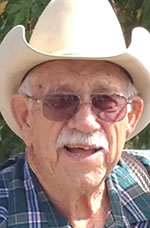
Harvest time

The Clarendon Enterprise - Spreading the word since 1878.

Demolition continues this week on what was once a bustling place of activity for Clarendon residents – the Antro Hotel.
Initial plans were to raze the three story building entirely to the ground, but that scope of work has now changed with the first story walls to be left intact for future use as an outdoor park or entertainment space.

The site of the hotel has a long history dating back to the establishment of New Clarendon in 1887 when the railroad came through. The first building on that location was also a hotel. The Windsor Hotel, with guest rooms upstairs and a saloon downstairs, was operated by John T. Nugent for just a few years before the building burned to the ground in 1892.
Two other buildings that later occupied the same property were destroyed in 1921 when what was described as a “freak storm” hit the central business district and left several properties severely damaged.
Then in 1926 work got underway on what would become known as the Antro Hotel. When it opened in early 1927, The Clarendon News proclaimed: “The Antro Hotel stands as a permanent and appropriate memorial to the citizenship of the man for whom it was named, G.W. Antrobus.”
Antrobus was called the oldest settler of New Clarendon because he had camped on the present site of the town before it moved from the settlement’s original location on the Salt Fork. Antrobus first came to Donley County in 1884 and stayed several years, building ranch houses, corrals, and fences. Later, he returned to Wichita Falls. But he moved back in 1887 and entered the lumber business, eventually establishing what became Watson & Antrobus with its first store being on the site of the future hotel.
The opening of the Antro was met with great success. Designed by Amarillo architect Guy Carlander, the Antro consisted of 42 rooms with a lobby and coffee shop on first floor and a basement under the north half that was the site of numerous banquets throughout the years. The hotel rooms sold out several times in its first year of operation, and many clubs, including the Lions Club, made the Antro basement their home.
The hotel was originally managed by Col. E.O. Thompson of Amarillo, who also operated the famous Herring Hotel in that city. That agreement lasted only a few years before the Antrobus family resumed primary control of the business.
The first electric signs for the hotel and coffee shop were installed in 1927, although the original sign was not the one on the building at the time demolition started last week. The Watson & Antrobus hardware business moved into the south side of the building in 1932 and remained there 14 years.
In 1946, the hotel sold to Fletcher Curry, and the property was renamed the Donley Hotel. Likely about that time is when the sign was changed to the one that was still present up until last week. At one point in 1954, The Donley County Leader reported that Curry had installed a large neon sign – 48 feet by 24 feet – that said “HOTEL” about 16 feet above the roof.
It’s not certain the exact date the hotel closed. By the early 1970s it was being referred to in news articles as “the old Donley Hotel” and the was site of rummage sales. By 1977, it had come under the ownership of Clyde Peabody and was sometimes referred to as the Peabody Hotel, even though it never operated as such. In March of that year, G.W. Estlack, who owned the neighboring print shop, met with the city about condemning the building. He asked the Board of Aldermen to notify Peabody to put the building in a reasonable state of repair, possibly reduced to a one-story building, as it was a fire hazard.
By 1982, the city and then Mayor Shirley Clifford was pressuring Peabody to do something with the building. By 1989, Peabody had turned the property over to the city along with some bond money, which was put to use to “mitigate the nuisance” presented by the dilapidated roof and upper floors. The exterior walls remained sound, and there was still some hope that something might come of the building, but the removal of the roof at that time as likely was the ultimate death sentence for the Antro.
Ten years later, the city was again looking at razing the building, but when the demolition bid came in too high, the aldermen put the property up for public bid. Russell Keown purchased the property for $5, and then spent many years trying to keep people out of the building before he donated it to the Clarendon Economic Development Corporation four years ago.
The CEDC sealed up the building from public entrance and engaged an engineer to draw up plans for the gutting of the hotel building and subsequent bracing of the exterior walls, but cost estimates caused that project to be put on hold. Time ran out for the Antro on July 29, 2018, when another freak storm hit downtown and a straight-line north wind clocked at 84 miles per hour pushed much of the north wall into the building’s interior.
Today, several architectural elements of the building are being salvaged during the demolition of the Antro Hotel, including the sign that hung on the front for so many years. The CEDC Monday night discussed the possibility of bringing in an architect to come up with a plan to re-use those elements and make the property an active part of downtown for the future.
The Clarendon College Men’s Rodeo team were the champions at both the Eastern New Mexico University Rodeo and the Sul Ross Rodeo the past two weekends.
These two wins are the first team championships in the program’s history.

At ENMU, Tegan Smith placed first and Riggin Smith placed third in Saddle Bronc Riding, and Brody Rankin and Casey McCleskey placed third in Team Roping. They were the #1 team with 345 points. Tarleton placed 2nd as a team with 335 points.
At Sul Ross, Tegan Smith won the bull riding, 3rd in the Saddle Bronc riding and was the All-Around Champion Cowboy. Riggin Smith won the Saddle Bronc Riding and Brody Rankin was 2nd in the Tie Down Roping. CC was the first placed team with 610 points, and Cisco College placed 2nd with 470 points.

The Rodeo Team will compete at Vernon College Rodeo Oct. 4-6.
Verna Grace Teague, 85, of Amarillo (formerly of Clarendon), died Tuesday, September 25, 2018, in Amarillo.
Services were held on Saturday, September 29, 2018, in the Community Fellowship Church in Clarendon with Rev. Larry Caprancia, officiating. Burial will be in Citizens Cemetery following the service.
Arrangements are by Robertson Funeral Directors of Clarendon.

Verna was born June 25, 1933, in Pampa to Lue and Lena Welch Smith. She married Jay Teague on August 14, 1950 in Clovis, New Mexico. She had been a resident of Amarillo most of her life until she retired from Central Freight lines and moved to Clarendon. Verna lived in Clarendon 20 plus years where she was member of the Community Fellowship Church. She enjoyed bird watching, gardening, painting landscapes, card and marble games and traveling in their RV. She was a loving mother, grandmother and sister.
She was preceded in death by her parents; her husband in 2015; a son, Kenneth Teague; a sister, Loretta Bell, and daughter in law, Linda Teague.
She is survived by her son, Stan Teague of Amarillo; brother, Joseph Smith and wife Natasha of Amarillo; grandchildren, Daphne Sanders of Amarillo, Carrie Gimpel and husband Dallas of Amarillo, Monty Ulibarri and wife Kara of New Braunfels, Jason Teague and wife Mindy of Wisconsin, Eric Teague and wife Shauna of New Jersey and Tracie Teague; 9 great grandchildren; 3 nieces, Valarie Conrad and husband Bill, Kerry Michael and husband John, Jodie Mineart and husband Ian, and numerous nieces and nephews that she loved dearly.
The family request that memorial be made to the Parkinson foundation.
Sign our online guest book at www.RobertsonFuneral.com
Howardwick Mayor Greta Byars has clarified the city’s new budget in terms of the funding for the fire department there.
Last week’s Enterprise reported that the fiscal year 2019 budget approved by the city council September 11 included more than $3,000 in additional funding for the department. However, Byars points out that the department’s discretionary funds have actually been reduced significantly.
The city’s current budget included $3,000 in discretionary funds for the fire department, but the city’s actual fire department expenses – for insurance, fuel, electricity, and propane – amounted to an additional $6,584.22 that was not previously budgeted in that line item. That brought the city’s total expense for the fire department to more than $9,500 for fiscal year 2018.
The new budget line item for the fire department totals $6,475, covering department’s expenses for fuel, insurance, and utilities but reducing the department’s discretionary funds from the city to $500, a drop of $2,500 compared to the current year.
State Senator Kel Seliger (R-Amarillo) met with Donley County residents last Wednesday, September 19, at the Bairfield Activity Center to discuss issues that will be coming before the state legislature next January.
Clarendon College was highlighted in the senator’s remarks, especially in terms of CC’s efforts to expand dual credit.

“Some of the best work being done in the state is being done in higher education,” Seliger said. “We have some kids getting an associate’s degree before they get their high school diploma.”
Seliger talked about the rigor of dual credit classes meeting the same rigor as college work and talked about the benefits of getting an associate’s degree before going to a four-year college.
“If you get your associate’s from Clarendon College, you’ll graduate faster at West Texas A&M than the kids who start there,” Seliger said.
The state has goal of having 60 percent of Texans have at least an associate’s degree or certificate by the year 2030, Seliger said, and he thanked CC President Robert Riza for his testimony the previous week in Austin on dual credit and workforce readiness.
Clarendon School Superintendent Mike Norrell also spoke in favor of dual credit.
“Dual credit saves our parents a lot of money,” Norrell said. “I think larger institutions don’t appreciate what community colleges are doing.”
Dr. Riza also thanked the senator for what he does for the district in Austin and also for what he keeps from happening.
Seliger opened his remarks by discussing the importance of voter involvement at the local level and efforts at the state level to control local officials’ ability to raise taxes.
“You don’t need Austin to cut local taxes,” Seliger said, noting that local officials can do that quickly and easily if it’s really important to local voters.
“Local decisions are better made locally,” the senator said. “That used to be a foundational issue. Now the Texas Public Policy Foundation claims local control is a myth because the state creates these local entities.”
Seliger also briefly discussed the state’s school accountability system before shifting his focus to school safety.
“Things have changed,” Seliger said, referring to the dangers that are now faced by schools. “Solutions will be local solutions. The state can tell you how to make schools safer, but the state can’t tell you how to pay for it.”
Seliger said he thought metal detectors in schools would take too much time and said he felt like schools would move toward having safety officers. He also said arming teachers should be a local decision.
On the subject of transportation, Seliger said he likes seeing traffic cones and barrels because it means TxDOT is spending money in our part of the state.
Donley County Judge John Howard thanked the senator for his support of local governments and his influence in keeping the local driver’s license office open.
Responding to a question from Mr. Norrell about teacher pay, Seliger said he prefers to increase funding to the basic allocation for schools and let schools decide where it’s needed.
Seliger also discussed the danger of the “wealthy far right” trying to buy seats in state government.
“That’s an oligarchy when you have wealthy people in control of the government,” he said.
Clarendon third grade teacher Cobette Riza presented questions from her students, including:
What’s your favorite thing about your job? “Being able to get things done that need to be done.”
How can you help our school? “By doing a good job funding schools.”
How many people voted for you? “80,000.”
Do you have a house like the governor? “No.”
The Cross Wagon team was the overall champion of the 24th annual Col. Charles Goodnight Chuckwagon Cookoff last Saturday, September 22, as participants and guests enjoyed fair skies and beautiful weather.

The Vega chuckwagon team outshined 13 other teams, placing in three out of five food judging categories placing second in Overall Cooking to take home the custom cutting board designed by Clarendon artist Jack Craft.
Officials with the Saints’ Roost Museum, which sponsors the event, said tickets to the event sold out last Thursday with wagons preparing food for a total of 700 people.
The 11th annual Junior Cookoff the day before the big event drew eight contestants, who were paired with experienced wagon teams to prepare potatoes for the cooks’ dinner Friday night. Haidan Norman from Howardwick won first place and was teamed with the Crosstimbers Ranch from Mustang, Okla.
Chelsea Wright of Clarendon was second, working with the Trap Drag Wagon of Pampa; and Dani Middleton of Hedley was third and worked with the Tin Cup Wagon of Holly, Colo.
Other junior participants included Kami Duncan, Brooke Duncan, Addy Havens, Aubrey Stidham, and Bryce Williams, all of Clarendon.
Following the Junior Cookoff, 165 people braved cool, damp weather to enjoy a delicious steak dinner Friday night on the museum grounds, compared to 209 the year before. The invitation-only event was held exclusively for Chuckwagon teams and members of the Museum and their families as well as members of the Goodnight family.

The trade show was held throughout the day Saturday, and live entertainment was provided. Relatives of Chuckwagon inventor Charles Goodnight also were present for their annual reunion.
Fourteen wagons served a menu of chicken fried steak, mashed potatoes, gravy, biscuits, beans, and cobbler. Wagons came from as far as Tennessee and Arizona to attend this year’s cookoff, although the Chiricahua Cattle Co. Chuck Wagon was present for educational purposes only and did not participate in the cookoff.
Prizes totaling $3,250 were paid out to the winners. Complete results were: Overall Wagon & Cooking: 1) Cross Wagon. Overall Cooking: 1) Camp Cookie of Germantown, Tenn., 2) Cross Wagon, 3) HX Chuckwagon of Lubbock, and 4) Crosstimber Ranch of Mustang, Okla. Best Wagon & Camp: 1) J Bar D Ranch of Amarillo, 2) C4B Chuckwagon of Amarillo., 3) Trapdrag Wagon, and 4) Crosstimber. Best Meat: 1) Cross Wagon, 2) T-Half Circle / Daugherty Wagon of Halfway, 3) Palo Duro Cowboy Church of Canyon, and 4) Lazy JM of El Reno, Okla. Best Beans: 1) Honey-Do Spoiler of Pampa, 2) Tin Cup Wagon of Holly, Colo., 3) Trapdrag, and 4) C Bar C Ranch of Hartley. Best Potatoes: 1) Camp Cookie, 2) Trapdrag, 3) T-Half Circle / Daugherty, and 4) C4B. Best Bread: 1) Crosstimber, 2) HX, 3) Cross, and 4) Camp Cookie. Best Dessert: 1) Camp Cookie, 2) Cross, 3) Crosstimber, and 4) HX.
Earlier this month, the Senate Joint Committees of Education and Higher Education held hearings in Austin on the subject of dual credit. There have been several studies researching the topic and two researchers were asked to speak during the hearing.
I was asked to testify at the hearing by Higher Education Committee Chair Kel Seliger to discuss the success our program has had and the opportunities it has provided to our students. Dual credit is where qualified high school students take college level courses and receive both high school and college credit. Much has been said about the “rigor” of dual credit courses, the qualifications of the teacher providing the class, whether these classes actually increase students’ graduation rates, and the financial savings for the students who take dual credit classes.

Dual credit has seen significant increases in enrollment during the past ten years. At the hearing, TACC President Jacob Fraire showed that the enrollment of dual credit students has increased 57 percent from fall 2007 to 2017. During the same time, Clarendon College’s dual credit enrollment has increased from 272 to 739 students this fall – a 272 percent increase. The majority of this increase has occurred in the past five years, going from a spring 2014 total of 338 to our current enrollment. During the past five years the number of semester credit hours has also increased from 1,689 to this semester’s total of 4,353.
During the aforementioned hearing, much of the debate of rigor was finally settled. I can only answer to the rigor here at Clarendon College, but our course offerings are identical to the ones offered down the halls of this building and at our other centers. There is not a watered-down syllabus or course requirements, it is the same class. I make no apologies for our rigor and expectations – if you want the college credit, then you do the college level work.
Some institutions have a different interpretation of the requirements of our accreditor, SACSCOC. SACSCOC visited Clarendon College in the spring of 2015 and spoke highly of our dual credit program. The instructors of our dual credit courses are predominantly our full-time faculty. Some of our high schools have asked about using their respective faculty; and if they can meet the standards set for by SACSCOC, then that is something we will consider.
Do dual credit students graduate at a higher rate than students without dual credit? Again, all I will comment on is the College’s own data. The latest data is from the 2012 cohort and it shows that 39 percent of our dual credit students finish a four-year degree in four years or less. When you look at the five-year rate, the percentage jumps to 49 percent. I can only imagine what the percentages will look like when this recent group of students begins to finish their four-year degrees.
An amazing point from two studies conducted by RAND the UT System was neither could confirm a financial savings to the student or their families from having dual credit hours. Senators Bettencourt and West had a very hard time understanding why the study could not provide any meaningful information on financial savings for families. During my testimony I was able to provide some anecdotal data concerning my children and the savings provided to us. A recent Clarendon High School graduate finished her senior year with more than 40 hours of dual credit and completed her Associate’s Degree at the College in one semester. Maybe someone should ask her what the savings meant to her and her family.
Some other concerns have been voiced regarding advising of dual credit students. These students receive the same advising our traditional students receive, usually by the same individuals. Our advising is driven by our Core Curriculum, a set of 48 semester credit hours that can transfer in a block to a state institution. After being core complete a student needs an additional 18 credit hours to complete their associate’s degree. I told the Committees that Clarendon College was recognized by the Texas Higher Education Coordinating Board in April for our increase in our graduation rate for the past three years. During that time the College’s graduation rate has climbed from 28 percent to 42 percent, indicating that our students are receiving proper advising and performing in the classroom.
Anyone that has heard me speak since I have been president has heard me state that I don’t think everyone needs a four-year degree, but everyone needs something past high school. Dual credit is not simply General Education courses, but it is Career and Technical Education (Workforce Development) as well. We have worked diligently to push our CTE courses into the high schools to allow students to complete certificates while they are still in high school. Since the passage of House Bill 505, 84th Legislative Session, Clarendon College has issued 57 CTE certificates to high school students in the last two years. We have also had several high school students graduate from Clarendon College with their associate’s degrees prior to finishing high school.
The College has worked closely with multiple local Foundations to fund all or part of the dual credit tuition and fees for students identified as low socio-economic. This enables students who are first-generation students to have access to college courses and support services to help them build a foundation to believe that they can also be successful in college.
In Clarendon specifically, the PEAK Scholarship has been expanded to include supporting Clarendon High School students with their dual credit tuition and fees. This has been done in partnership with the Clarendon College Foundation.
I have been told, that this is “not the way we used to do things.” Texas law requires high schools provide access to dual credit courses for their students. If we at Clarendon College do not provide it, someone else will, and I am not very keen on other colleges being in our service area.
Why does relevance matter? Would you have ever imagined a Christmas without a Toys “R” Us store? We continue every day to make the College relevant in the Panhandle and in the rest of the state.
WE are Clarendon College: Without Equal.
Charlsey Ann Whitt Scribner, 89, of Olton, died Wednesday, September 19, 2018, in Lubbock.
Funeral services were held September 21, 2018, at the First United Methodist Church in Olton with Brother Neely Landrum officiating. Graveside services were Saturday, September 22, 2018, at Mobeetie Cemetery in Mobeetie with Thacker Haynes officiating and under the direction of Ramage Funeral Directors.
Charlsey was born June 13, 1929, to Walter Jackson “Jack” and Ida Jane (Long) Whitt, in Childress County. She grew up in Clarendon and graduated from Clarendon High School in 1945. Continuing her education at Clarendon College and West Texas State College, she received her Bachelor of Science degree in chemistry and an all level teaching certificate in 1948. She went on to earn her Master’s Degree in Education from West Texas State in the early 1970s. Charlsey never planned to be a teacher, but, in the fall of 1948, she began a 43-year teaching career in Gruver, Texas. She also taught school in Mobeetie, Brisco, Kellerville, and Olton, where she taught more than 35 years.
In 1950, she married Bud Carroll Scribner at the First United Methodist Church in Mobeetie. They were married until his death in 2015. She enjoyed travel and had visited every state but Hawaii and joked she could not go there because “you can’t drive to Hawaii”. Mrs. Scribner also enjoyed reading, documenting family travels, and her cats.
She was preceded in death by her parents, her husband, Bud Carroll Scribner, and her sister, Lopez Hauck.
Survivors include her daughter, Carol Ann Scribner and her husband Bernie Worrell of Olton; her niece, Ann Goodman; nephews, Don Hauck and his wife Cynthia and David Lee Hauck; numerous cousins and friends; and most of all, by all the students she taught.
The family suggest memorials be made to the Olton Volunteer Ambulance Association P.O. Box 1087 Olton, Texas 79064, the Mobeetie Cemetery Box 8 Mobeetie, Texas 79061, or a favorite charity.
Clarendon College’s previous enrollment record bit the dust last week when CC set a new all-time high for a fall semester.
Following the 12th class day last Wednesday, CC’s fall head count was officially tallied at 1,639, setting a new benchmark for the 120-year-old college and blowing by the previous record enrollment of 1,590 set in the fall of 2017.
“Obviously, we’re very proud of everyone involved,” CC President Robert Riza said. “When you take care of processes and take care of students, growth will come.”
Forty-nine students above fall 2017 represents about a 3.1 percent increase, but it’s a dramatic increase compared to where the college was just four years ago. Enrollment in Dr. Riza’s first fall semester enrollment in 2014 was 1,211, and Clarendon College has posted growth every fall since then. This fall’s enrollment is more than 35 percent higher than 2014’s headcount.
The growth this year is particularly impressive when the regional unemployment rate is taken into consideration. College officials say enrollment usually dips when unemployment is low.
“We’re at what’s considered full employment in the Texas Panhandle,” Riza said.
The Texas Workforce Commission reports the July jobless rate in the Amarillo area at 2.9 percent.
Enrollment on the Clarendon campus this fall is 340 compared to 338 last year with higher enrollments in the dorms than last year. The dorms are full, and the college’s new strategic plan calls for finding ways to add more beds to the campus.
Enrollment at the CC centers in Childress and Gray counties are down. Pampa is at 196 compared to 238 one year ago; and Childress is 34 compared to 43. Both of those communities are experiencing very low unemployment, Riza said, which has hurt enrollment there. College officials pointed out, however, that some students in Gray and Childress counties have shifted from traditional classroom classes to online classes.
A total of 125 students are enrolled in strictly online classes, also known as distance education, this fall.
CC’s cosmetology campus in Amarillo was essentially flat with an enrollment of 85 students with 44 traditional students and the remainder being dual credit students from Amarillo and Canyon.
The main driver of CC’s enrollment growth has been dual credit offerings, which the college now has in 22 area school districts. This fall has 735 students taking dual credit through CC, up from 678 last year.
“Over the last five years, we’ve increased dual credit head counts by about 225 percent,” Riza said. “Our credit hours through dual credit are up about 250 percent.”
Clarendon High School has 34 students enrolled in dual credit this semester. Hedley has 14.
Clarendon College’s success with dual credit led Sen. Kel Seliger to call Dr. Riza to Austin last week, where he testified about that subject before the Senate Joint Committee on Education and Higher Education. In a Tweet Tuesday afternoon, Seliger said it was great to have Senate District 31’s very own President Riza in Austin to showcase the success happening at Clarendon College.
CC’s enrollment growth has continued to be strong across all semesters. The spring 2018 enrollment of 1,451 was also a school record for that period, and summer classes and mini-sessions have also been setting records in 2017 and 2018 as the college works to offer classes in demand and on schedules that attract students.
“If you do the things you’re supposed to do, enrollment follows,” Riza said. “When you look at the calendar, we have just one day out of the next 11 months or longer that we do not have students in some kind of class.”
CC’s next session – an eight-week mini-session for cosmetology, welding, and online classes – starts October 22, and a CDL session starts October 29 in Pampa.
We use cookies to improve your experience on our site. By using our site, you consent to cookies.
Manage your cookie preferences below:
Essential cookies enable basic functions and are necessary for the proper function of the website.
These cookies are needed for adding comments on this website.
These cookies are used for managing login functionality on this website.
Statistics cookies collect information anonymously. This information helps us understand how visitors use our website.
Google Analytics is a powerful tool that tracks and analyzes website traffic for informed marketing decisions.
Service URL: policies.google.com (opens in a new window)
You can find more information in our Cookie Policy and .
Reader Comments