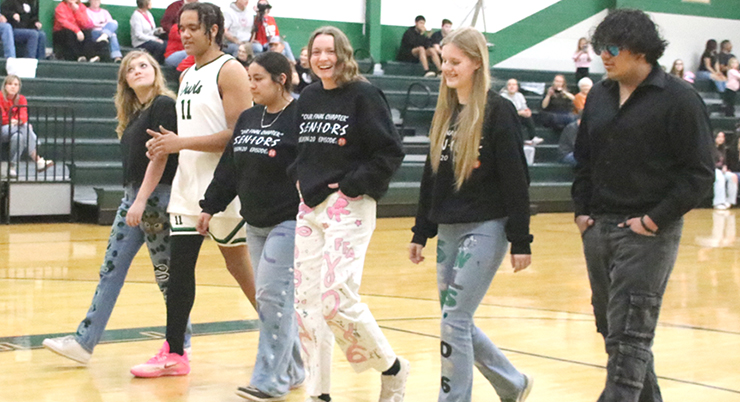
Last walk
The Clarendon Enterprise - Spreading the word since 1878.

By Sandy Anderberg
The Lady Broncos spent little time running the gamut on Highland Park and Memphis to close out their regular season last week and secure a spot in post-season play.
The Lady Broncos clobbered the Lady Hornets at 70-6 and breezed by the Lady Cyclones at 74-14.
Neither game was ever contested by their opponents as they were able to execute their offense at will while able to make stops and cause turnovers. They were able to capitalize on those turnovers and missed shots to closed out both games.
Highland Park never gave the ladies any competition on either end of the court and struggled against the Lady Broncos’ offensive attack. The Lady Bronco strong defense frustrated the Lady Hornets as they were not able to climb into double digits until the third quarter of play.
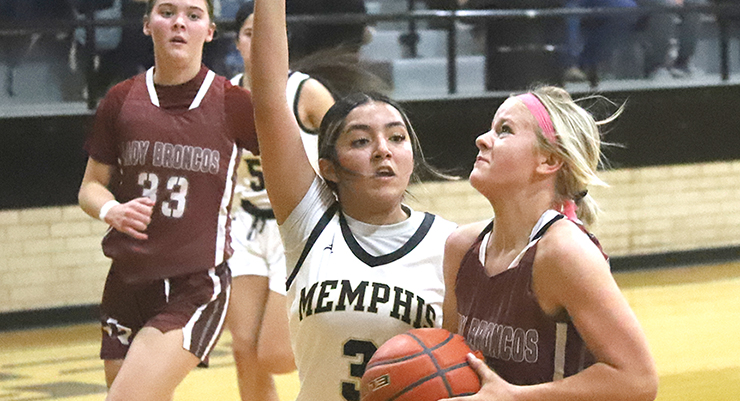
Presley Smith ended with 15 points and Kenidee Hayes and Kate Shaw put in 12 apiece. Laken Smith and Millie McAnear each had eight, Gracie Ellis put in seven, and Madi Benson added six.
Four players finished in double figures in the game against Memphis with P. Smith leading the way with 19 points. G. Ellis, Hayes, and L. Smith turned in 13 points each and Shaw and McAnear helped with eight and four points respectively. The ladies dropped in nine big shots from the arc and made three of four bonus shots in the game.
The Lady Broncos will face Vega Monday at 6:30 at Amarillo High School for the bi-district title. Follow us at Facebook.com/TheEnterprise for updates.
By Sandy Anderberg
The Clarendon Broncos put together four solid quarters of play and defeated Highland Park 68-48 at home last week.
However, on Friday, the Broncos came up short against the Cyclones at Memphis at 47-49.
The Broncos played with determination in both games with post-season play in mind and they were able to outlast Highland Park. The Broncos used a big-scoring second quarter to gain a 12-point lead over the Hornets at the break and were able to hold that momentum going into the final half of play. HP was unable to slow the Broncos down before time expired.
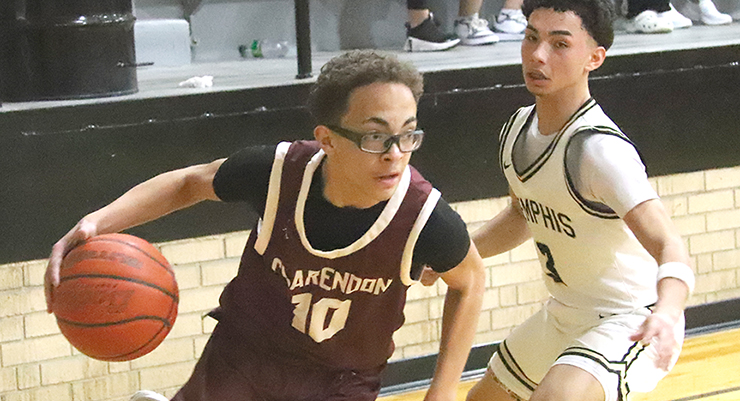
Michael Randall led all scorers with 23 points. Braxton Gribble pumped in 14 and Brentley Gaines finished with 12. Randall also racked up 18 rebounds for another double-double and went three of six from the bonus line. Gribble and Gaines dominated from the arc with four and three three-pointers respectively. Overall, the team pumped in eight threes and hit 10 of 17 free throws.
Tyler Cavanaugh put in nine and went two for two from the free throw line and Heston Seay helped with five points and seven rebounds. Kreed Robinson, Caleb Herbert added two points each, and Aiden Morris hit one of two bonus points.
The Broncos were hoping their win over the Hornets would be the propeller to a win over the Cylcones, but they were unable to make a final shot to win or extend the game. The Broncos played hard but were unable to get the win.
Gaines had a big game and put in 15 points that included five three-pointers. Seay added eight and Tyler Cavanaugh put in seven. Gribble had six, Randall finished with five, Herbert helped with four, and Robinson added two. The Broncos only shot 42 percent from the bonus line, which made a big difference in the outcome.
The Broncos travel to Panhandle February 13 and finish their season at home on February 17 against Wheeler at 6:00 p.m.


By Sandy Anderberg
The Lady Broncos played solid against the Wheeler Lady Mustangs last week and were in control throughout to get a huge district win at 53-20.
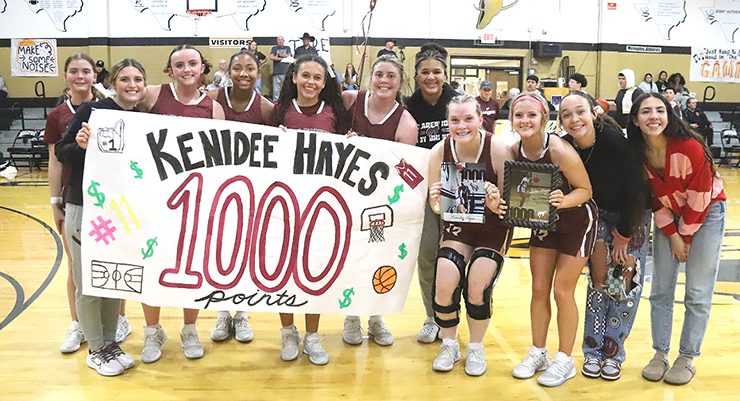
Kenidee Hayes led the way with 17 points that included three three-pointers, and Kate Shaw added 11 total points and was perfect from the bonus line hitting both free throws she attempted.
Overall, the Lady Broncos finished with three three-pointers and converted nine of ten free throws.
The ladies totally dominated Wheeler and held them to only three points in the first half of play while taking a 27-point lead into the locker room. The Lady Mustangs were never able to grab any momentum in the game as it all belonged to Clarendon.
Presley Smith and Berkley Moore added eight points each, and Gracie Ellis put in three. Madi Benson, Millie McAnear, and Laken Smith helped with two points each.
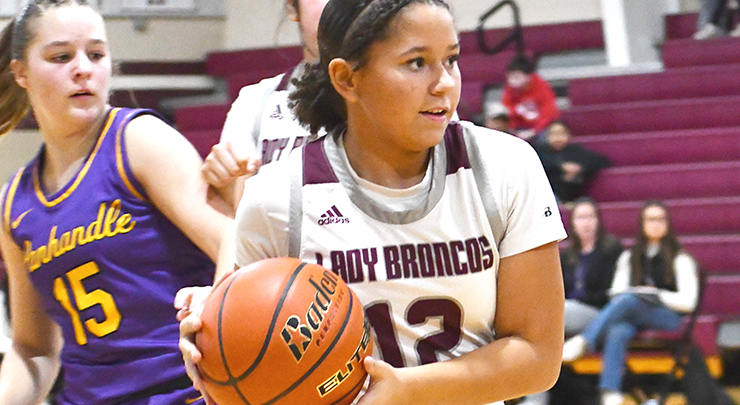
Earlier in the week, the Lady Broncos hosted Panhandle and fell 38-52. Clarendon struggled to get anything going offensively in the game and were plagued by turnovers and missed shots. The ladies never gave up and were able to start a small comeback in the final eight minutes, however time was their enemy and they took the loss.
Shaw led with 12 and Hayes added 11. Moore put in nine, P. Smith put in four, and Benson had two.
The Lady Broncos will travel to Wellington January 30 and take on Highland Park at home on February 3 beginning at 6:30 p.m.
By Sandy Anderberg
The Broncos hosted Panhandle last week and played hard in their 30-64 loss to the Panthers.
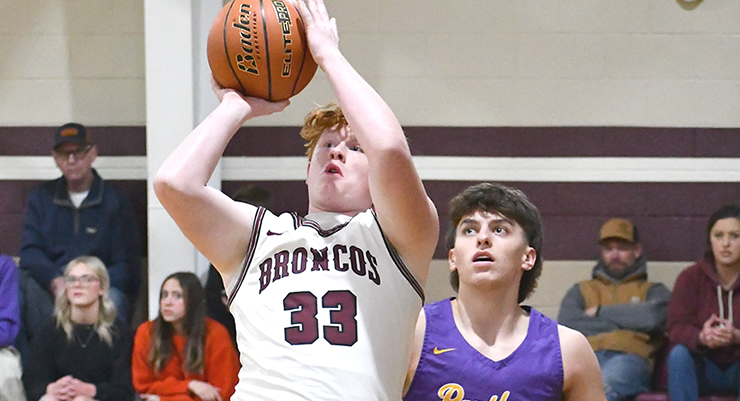
The Broncos jumped out on fire and racked up a three-point lead after one quarter at 8-5. But a cold second eight minutes proved to be messy for the Broncos as they struggled on both ends of the court.
The Panthers were able to outscore the Broncos 19-3 to take a 13-point lead at the break. Panhandle was able to use the momentum to take them to a victory.
Overall, the Broncos three three-pointers and converted free throws at only 42 percent.
Michael Randall led with 17 points and Heston Seay added four. Brentley Gaines helped with three, and Paxton English added two.


Reader Comments