Downsizing
The Clarendon Enterprise - Spreading the word since 1878.

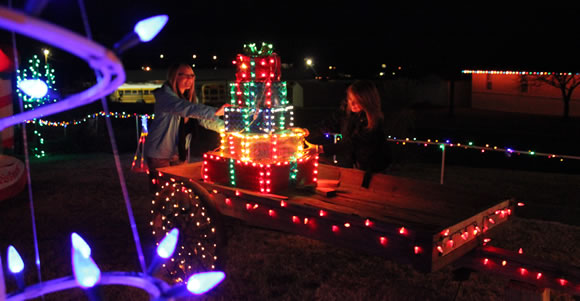
Twinkling lights illuminate the homes of Clarendon residents Glen and Susan Bailey, Steve and Robin Sell, and Larry and Jamie Jeffers. Cars passing by slow down, pause, and even stop to gander at the beauty of the various Christmas decorations that temporarily engulf these houses. As multicolored lights shine, Christmas spirit from these homes spreads to all those witnessing their glow.
“Our main goal is to cheer people up,” Glen Bailey said. “Everyday life will get you down, and hopefully it makes people happy even for a little while when they come by. That’s what it’s all about.”
These families are displaying their Christmas joy by “going to the extreme” with their Christmas displays, as Bailey said.
“We’ve always decorated, it’s just gotten bigger and bigger because we’ve got more grandkids,” he said. “We have about 23 blowups outside our house right now. Too many after season specials. We try to get at least one blowup a year if we find one we like, but last year we got four.”
All three families agree that the weeks of putting up their decorations are well worth it when they see people’s reactions.
“Sometimes I just stand in my living room and watch people get out and take pictures with their kids,” Larry Jeffers said. “It’s neat to watch. If you’re a grinch, then you don’t need to come by the house.”
At the Sells home, there are light shows set to music. The songs they included this year are from the Trans-Siberian Orchestra, Yule, and the worship band from Trinity
Fellowship in Amarillo.
“We’ve had some people who have been in tears after seeing our music with the lights,” Steve Sell said. “We look out at the window every night just to see who is all out there. It’s really fun to watch the little kids. They dance in the street with the music playing. They get pretty into it.”
One of the main reasons the Jeffers and Baileys decorate is for their grandchildren.
“We have seven grandchildren, and one of our granddaughters calls our house a ‘Christmas Wonderland,’” Bailey said. “As long as we can afford to, we will go to extremes for our grandkids because Christmas is special for them, and they will always remember it. You’re only a kid once, so we feel like this is important.”
The grandchildren are not the only ones enjoying the lights, though. These spirited families are receiving compliments from many people for their decorations.
“We had people at Halloween thank us for the Christmas decorations before hand,” Bailey said. “We have people stop and tell us how much they enjoy it all the time, and we see cars lined up and kids leaning out with smiles on their faces. It makes us feel good that we’re making others feel good.”
All in all, the mass of extension cords and breakers is plugging in more than mere lights – it’s also turning on Christmas spirit.
“Christmas is our favorite holiday, and we hope that everyone is enjoying our display,” Bailey said. “I hope we’ve inspired more people to decorate. There’s no such thing as decorating too much.”
 Obituaries
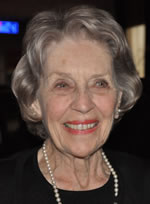
Anne Lewis David, age 92, died on the December 11, 2010, at home with family. A memorial service was held Thursday, December 16, at The Church of St. John the Divine in Houston, with Rev. Dr. Laurens A. Hall, Rector, officiating.
Anne was born in Dallas to the late William Jenks Lewis, Sr. and Willie Lee Newbury Lewis on September 12, 1918. She lived a long and interesting life. She always had a smile on her face. She attended The Hockaday School in Dallas and Sarah Lawrence College in Bronxville, New York.
She was a member of several volunteer groups, including The Garden Club of Houston and The Junior League of Houston, Inc. She enjoyed her volunteer work. She was a member of the Houston Country Club and loved her bridge luncheons with her friends and golfing on the weekends.
She was an avid traveler and enjoyed trips abroad to England and Ireland on a frequent basis with her husband and friends. Stateside, she enjoyed annual trips with her husband and family.
She was the owner of the historic RO Ranch and Shoe Nail Cattle Company, family cattle operations in Clarendon, Texas. She was passionate about her trips to the ranch and loved picnics on the Salt Fork of the Red River. She enjoyed semi-annual gatherings with her extended family.
Anne is preceded in death by her first husband, the late William Henry Gibbons, Jr.; and her second husband, the late James Philip David, to whom she was married to for 44 years. Anne is the late daughter of W.J. Lewis of the RO Ranch.
She is survived by five children, William Henry Gibbons, III and wife Frances, Lewis Newbury Gibbons and wife Marsha, Betty Gibbons, Cindy David Pickard and Joan Pendleton David; three grandchildren, Andy David Pickard and wife Kim, William Jenks Gibbons and wife Alexis and John Warren Gibbons and wife Sarah; and five great-grandchildren, James Philip Pickard, Chloe Elise Pickard, Xander Jenks Gibbons, Levi Henry Gibbons and Lily Anne Gibbons.
In lieu of customary remembrances, the family requests with gratitude that memorial contributions in Mrs. David’s honor be directed to the Houston Society for the Protection of Cruelty to Animals, 900 Portway Dr., Houston, TX, 77024; or to the charity of one’s choice.
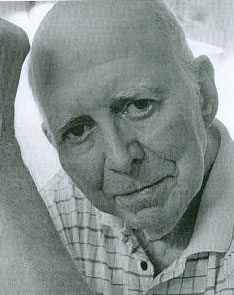 Ronald Brown Vorheis, 70, died Friday, December 10, in Claude.
Memorial services were held at 10 a.m. December 13, 2010, in Robertson Funeral Directors Saints’ Roost Chapel in Clarendon with Jeff Booth, minister of the Christian Church of God, officiating. Interment was held privately with a family burial held at Vorheis Family Cemetery in Clarendon. Services were under the arrangement of Robertson Funeral Directors of Clarendon.
Ronald Brown Vorheis of Clarendon died December 10, 2010, after a lengthy illness. Ron was born March 6, 1940 in Geneseo, Kansas. He grew up in Littlefield where he met his future wife, Mary Pitman. After graduating high school, he attended Hardin Simmons University.
Soon after, he joined the US Army and served in Korea. After returning to the states, he worked at Littlefield Butane, then went to West Texas College in Canyon. He then married Mary on August 27, 1965, in Littlefield. He earned his bachelors degree in Mathematics in 1967 and his masters in Mathematics in 1968. He taught math at Howard County Junior College in Big Spring, then went on to a lengthy career teaching math, English, Spanish, and computer programming to high school and junior high students. In 1989, Ron moved to Clarendon with his family where they ran Clarendon Family Café for a number of years. He was an avid student of God’s Word all of his life and loved spending time outdoors enjoying nature. He passed these loves to his family. He was the anchor of his very large and very loving family.
He was preceded in death by his parents.
Survivors include his wife of 45 years, Mary Vorheis of Clarendon; 4 daughters, Rhonda Lopez and husband Matt of Tulsa, Oklahoma, Becky Pillow and husband Greg of Lubbock, Elisabeth Vorheis of Mansfield, and Leah Carruth and husband Tony of Lubbock; 6 sons, Ike Vorheis and wife Elsa of Van Horn, Josh Vorheis and wife Susan of Allen, Jonathan Vorheis and wife Marci of San Antonio, Jeremy Vorheis of Sugarland, Ben Vorheis and wife Julie of Las Vegas, Nevada, and Phillip Vorheis of Lubbock; 22 grandchildren and 3 great grandchildren.
The family request memorials be to the Alzheimer’s Association.
The family will be at 4005 County Road 13 in Clarendon.

Things clicked offensively for the Broncos as they routed Silverton, and six players finished in double figures.
Scoring: Johnny Gaines 23, Cole Ward 20, Chris Crump 14, Adam Topper 11, Mike Crump 10, Bradley Watson 10, Brayden Phillips 7, Justin Shillings 4, and Wesley Williams 4.
The Broncos took on Highland Park in the next round and breezed to a 54-31 win. After a slow half, the Broncos turned on their offense in the third quarter to go up by 17 points. The Hornets could not answer and felt the defensive pressure from the Broncos.
Scoring: Gaines 23, Phillips 7, C. Crump 6, Topper 6, Shillings 4, M. Crump 4, Watson 2, and Ward 2.
Dalhart handed the Broncos their first loss of the tournament in the next round at 52-65. Missed shots plagued the Broncos who could not find a rhythm offensively.
Scoring: Phillips 17, Gaines 14, C. Crump 7, M. Crump 7, Shillings 3, Ward 2, and Topper 2.
The Broncos recovered nicely in the next round to earn third place with a big 55-51 win over Childress. Clarendon got their offense moving in the right direction early on but let the Bobcats back into the game at the break.
Clarendon held a slight lead after three but made the go-ahead points to finish the game in the final quarter.
“Overall we played well,” coach Brandt Lockhart said. “We did not have a good game against Dalhart but came back with a good game against a good Childress team.”
Scoring: Gaines 16, Phillips 13, Ward 10, Shillings 9, Daniel West 2, C. Crump 2 Williams 2, and M. Crump 1.
Earlier in the week, the Broncos hosted Perryton at home and defeated them, 66-59. Good solid play was key in the victory.
Scoring: Gaines 31, Shillings 9, Phillips 9, C. Crump 6, Watson 5, Topper 4, West 2, and M. Crump 1.
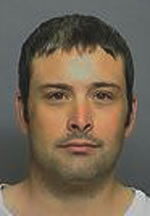 The Donley County Sheriff’s Department arrested Gabriel Callis of Lelia Lake after he assaulted a relative and threatened suicide last week.
Sheriff Butch Blackburn said his office received a call at 7:28 p.m. last Thursday, December 9, from a residence in the 300 block of South Woodrow Street in Lelia Lake, reporting that Gabriel Callis was in the house with a gun and had been threatening suicide for two hours.
Callis had assaulted a female relative by shoving her down onto a brick fireplace and was making threats with a BB pistol, the sheriff said. The subject ran out of the backdoor of the house prior to officers arriving. A search was made for Callis, and he was arrested at 8:48 p.m. as he walked back into the house from hiding in some nearby weeds.
Blackburn said Callis was jailed for a violation of probation and bond was denied by District Judge Stuart Messer. He is facing additional charge of Family Violence – Aggravated Assault.
Callis, who is a professional gospel singer, was found guilty in 2007 of Indecency with a Child. The victim was 13 years old at the time.
The jury in 2007 also found Callis not guilty of a second count of the same charge.
Jurors heard testimony of two prior assaults the defendant had committed, but Callis
had no prior history of sex offenses.
Callis also threatened suicide wielding a knife the day of his sentencing in 2007, but was talked out of doing anything by local officers.
Callis is a registered sex offender and was originally sentenced to five years confinement probated to eight years probation and a fine of $10,000 probated to $5,000. He could face prison time for violating his probation.

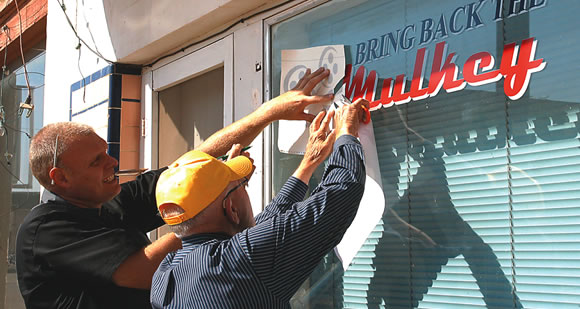
As part of the move to bring the theater back, the Clarendon Economic Development Corporation and the Bring Back the Mulkey Advisory Committee this week began a fundraising campaign in hopes of raising at least $20,000 to light up the marquee.
All of the money raised from this fundraiser will be put towards the marquee with any overages put towards the continued rehabilitation of the Mulkey in hopes of getting it operational.
The fundraising campaign is just the next step in an overall plan in rehabilitating the Mulkey Theatre and reinvigorating downtown Clarendon.
The Clarendon EDC purchased the Mulkey Theatre in 2008 and to date has spent more than $50,000 replacing the roof, preserving the integrity of the structure, and conducting an engineering study of the building.
“This project is in keeping with the goal of the CEDC to beautify downtown,” CEDC President Steve Hall said. “We hope to once again make it a jewel of Kearney Street.”
Decisions about the interior of the building and possible uses for the theatre are still in the future at this point, CEDC Secretary Roger Estlack said.
“We’ll be looking closely at what has been done with the Ritz in Wellington and the Morley in Borger as we move forward,” Estlack said. “This project is going to take time, and we want to do it right.”
Donors can light up a letter in the Mulkey sign for $1,000 each, become a Mulkey partner for $50 to $1,000, or purchase a “light bulb” at participating business on Kearney Street in Clarendon. The light bulbs will be hung up in businesses downtown showing the donor’s support of this project. Mulkey partners will be recognized permanently inside the theatre.
To make a donation or for more information you may call The Clarendon Enterprise at 806-874-2259 or go by 105 S. Kearney Street in Clarendon. Or make your donation directly by sending a check or money order to the Donley County Historical Commission, PO Box 905, Clarendon, TX 79226, and note “Mulkey Theatre” in the memo.
The Mulkey Theatre was built in 1946 on the site of an earlier theatre – The Cozy – which burned in 1945. It was constructed by Lena Mulkey in honor of her deceased husband, who came to Clarendon to operate a photography studio in 1895 and took over the local theatre business in 1912. The Mulkey operated as a motion picture theatre by Mrs. Mulkey and manager Lee Bell and was later purchased by Gary Barnhill. It closed in about 1986.
Due to the condition of the Mulkey and its role in the history of Clarendon, the CEDC has applied to Preservation Texas for a designation for the theatre as one of the Most Endangered Places in Texas, and a decision on that application is expected in February. The CEDC believes saving the Mulkey is critical because of its cultural and architectural importance to the community.
For more information, visit the EDC’s website www.clarendonedc.org; or to share your comments or memories of the theatre, search for the “Mulkey Theatre” page on Facebook.


Reader Comments