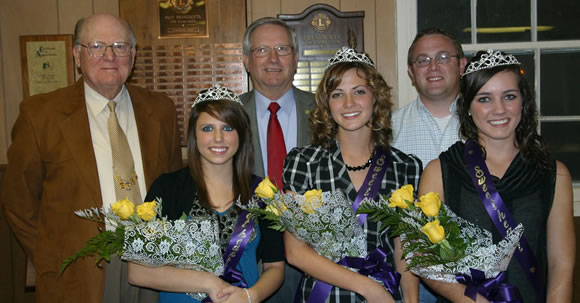
Lions celebrate 88th anniversary
The Clarendon Enterprise - Spreading the word since 1878.


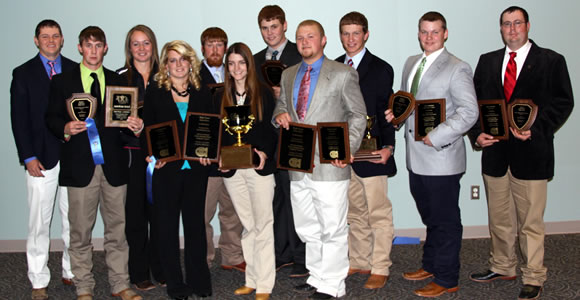
Fay Vargas defeats Janette Cox Wagner, 646-518 for District/County Clerk. Dan Sawyer defeats Brad Dalton 165-102 for Donley County Commissioner Precinct 4. Denise Bertrand defeats Colleen Owens 278-264 for Justice of the Peace Precincts 3 & 4.
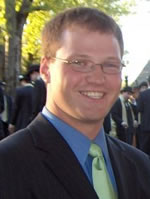 Funeral services for Thomas Nickless McCain Devin, 27, of College Station are set for 2 p.m. Tuesday, November 2, at Geo. J. Carroll & Sons in Gainesville, Texas, with Jonathan Brooks officiating. Burial will follow in Fairview Cemetery under the direction of George J. Carroll & Sons.
Thomas Nickless McCain Devin died October 30, 2010, at Fort Worth, Texas. Nickless was born March 31, 1983, in Tulia, Swisher County, Texas.
Survivors include his parents Thomas “Mac” and Karla McCain Devin of College Station; his grandparents Horace K. McCain of Gainesville, Delbert L. & Betty Devin of Tulia, Roy T. & Ireta Janiec of Bend, Oregon, and Bob McDaniel of Gainesville; his sister, Noel Devin of College Station, and brothers, Nelson Devin of Tuscaloosa, Alabama, and Neil Devin of College Station. Nickless is also survived by uncles, aunts, cousins, and countless friends. He was preceded in death by his grandmother, June Davison McCain of Gainesville.
Nickless, a 2001 graduate of Clarendon High School, was class valedictorian, a three-year football letterman, and a member of the Bronco Band. He was a decorated Eagle Scout. At The University of Alabama, Nickless earned a B.S. in Mechanical Engineering. While at UA, he was honored as the Outstanding Freshman and Sophomore of the Year and maintained a 4.0 GPR during his undergraduate career. Nickless was a member of the prestigious Jasons Society and was a Capstone Man. He was also a member of numerous academic honor societies and was the recipient of the President’s Scholarship, many departmental scholarships, and the DHS scholarship. He played flag football for The House, a team that was placed second nationally on two occasions. He was a dedicated fan of the Alabama Crimson Tide.
Nickless began his career with Chevron Pipeline as an intern for Pascagoula Gas Plant in the summer 2006. He returned to Chevron working for Pipeline in March 2007 as a Field Engineer for MidContinent Texas “Dream Team”. During this time, Nickless received the President’s Award for outstanding achievements. In March 2009, Nickless was promoted to Operations Supervisor for MidContinent Weatherford Field Team. Nickless was one of the few high potential Horizon’s engineers chosen for the supervisor position with the program. During his time as Operations Supervisor, Nickless received numerous awards for leadership and commitment to operational excellence. He will truly be missed by the many people who had the honor of calling him friend and co-worker.
In lieu of flowers, the family requests that all gifts be directed to the Nickless Devin Endowed Scholarship at the University of Alabama. Checks should be made payable to the Nickless Devin Endowed Scholarship – UA and mailed to The University of Alabama, Office of Advancement Services, Box 870101, Tuscaloosa, Alabama 35487.
Pall bearers are Jared Hartman, Shanon Martin, Eric Rumanek, Rob Rumanek, Trey Hayes, Bob Boylan, David Whitman, Paul Feaga, Craig Rooker, Blair Clinton, Lee Reed, Alex Dean, Steven Villavaso, and Brad Hoffman. Honorary pall bearers are Elizabeth Simmons Zongker, Lindsey Shelton, Tiffany Eurich, Christy Gantt, Amy Baker Parton, Ann Taylor Reed, Ellen Dean, and Jennifer Browning McInnish.
Visitation was Monday, November 1, from 6pm-8pm at Geo. J. Carroll & Sons in Gainesville.
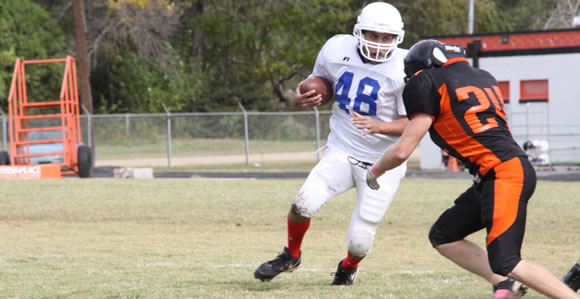
Donley County voters will head to the polls next Tuesday to decide three local races and make their voices heard regarding several state positions.
In the only county-wide contested race, County/District Clerk Fay Vargas is facing a challenge from Janette Cox Wagner. Vargas is running on the Democratic ticket, and Wagner is on the Republican ticket.
Voters in Precincts 3&4 will choose a new Justice of the Peace to replace the retiring Ann Kennedy. Democrat Colleen Owens will face Republican Denise Bertrand for that office.
Precinct 4 voters will also select a new commissioner to take the seat occupied by the retiring Bob Trout. Dan Sawyer is running for that office as a Republican, and Brad Dalton is running as a Democrat.
Other local officials are running without opposition, including County Judge Jack Hall, County Treasurer Wanda Smith, Precinct 1&2 Justice of the Peace Connie Havens, and Precinct 2 Commissioner Donnie Hall.
Precinct 3&4 voters also have an unopposed write-in candidate for the constable’s job in that part of the county. Doug Wright is seeking that currently vacant position.
Also of local interest, Clarendon native and United States Congressman Mac Thornberry (R) is being challenged by Libertarian John T. Burwell, Jr., and independent candidate Keith Dyer.
Voters will also cast ballots for governor, lieutenant governor, attorney general, state comptroller, and several other offices.
A sample ballot for local voters is printed on page six of this week’s Enterprise.
Early voting continues through this Friday, October 29, from 8 a.m. to 5 p.m. weekdays in the Donley County Clerk’s office in the Courthouse Annex.
Polling next Tuesday will take place from 7 a.m. to 7 p.m., and voters should check their voter’s registration card to find out which of the following is their polling place:
Precinct 101 – Bairfield Activity Center – Clarendon College.
Precinct 102 – Howardwick City Hall.
Precinct 201 – County Courthouse.
Precinct 301 – Assembly of God Fellowship Hall.
Precinct 303 – Hedley Lions Club.
Precinct 401 – Family Life Center – Clarendon Church of Christ.
Local election results will be posted Tuesday night on www.ClarendonLive.com.
The First United Methodist Church of Clarendon is inviting the public to attend a 100th anniversary celebration next weekend, November 6-7.
Established in 1888, the church started out at the southeast corner of Fourth and Kearney Streets, but the congregation quickly outgrew that wood frame building. So in 1910, the present building was erected at the corner of Fifth and Jefferson.
That same year, the building, which still serves the church today, was the birthplace of the present Northwest Texas and Central Texas annual Methodist Conferences.
To commemorate the opening of this beautiful structure and the organization of the two conferences, the First United Methodist Church will hold a celebration Saturday and Sunday, November 6 and 7.
The Saturday program will feature Dr. Tom Fuller, General Evangelist for the United Methodist Church, who will discuss the influence of John Wesley and how his teachings apply to Christianity today. The program begins at 6:30 p.m. and also will include a selection of music that will span the generations since 1910.
Sunday service on November 6 will begin at 9:45 a.m., and former pastors have been invited to attend and participate. Conference representatives will also be on hand as the church building is rededicated and a special message is brought by Dr. David Murrah, the author of “Are We Yet Alive?”: The Centennial History of the Northwest Texas Conference.
Following the service, a meal will be served in the Fellowship Hall.
The 100th District Court heard three pleas resulting in convictions when it met in Clarendon October 7.
District Attorney Luke Inman, assisted by Greg Buckley, prosecuted the cases for the State of Texas with the Honorable Judge Stuart Messer presiding.
A total of $9,000 in fines was assessed as a result of the pleas that took place on October 7. In addition to the fines, the defendants were required to pay a total of $1,128 in court costs.
Bradley Ray Southerland pleaded true to allegations listed in the State’s Motion to Adjudicate Guilt of Defendant and was convicted and sentenced to ten years in the Institutional Division of the Texas Department of Criminal Justice.
Southerland, a 36-year-old Wellington resident, was originally indicted by the Collingsworth County Grand Jury on February 22, 2010.
On March 5, 2010, Southerland pleaded guilty to the second degree felony offense of aggravated assault with a deadly weapon that occurred on November 7, 2009, in Collingsworth County.
The 100th Judicial District Community Supervision Department forwarded a violation report to the District Attorney’s office on September 2, 2010. The State filed the motion to adjudicate on September 16, 2010, alleging four violations of community supervision.
Aggravated assault with a deadly weapon is defined as a 3g offense in the Texas Code of Criminal Procedure, requiring Southerland to complete at least 50 percent of the sentence before becoming parole eligible, according to Inman.
Southerland pleaded true to all violations contained in the State’s motion and was sentenced to ten years in the TDCJ. Southerland is also required to pay $376 in court costs to Collingsworth County, and a $5,000 fine.
Jeffrey Neil Henson pleaded to two third degree felonies resulting in two, eight-year convictions.
Henson pleaded true to allegations listed in the State’s Motion to Revoke Community Supervision and was convicted and sentenced to eight years in the Institutional Division of the Texas Department of Criminal Justice.
On March 8, 2010, Henson originally pleaded guilty to the third degree felony offense of driving while intoxicated 3rd or more that occurred on September 19, 2009, in Hall County.
The State filed the motion to revoke on September 1, 2010, alleging five violations of community supervision after receiving the violation report on August 19, 2010.
One of those violations was for another DWI offense while on probation that occurred on July 15, 2010. Henson pleaded guilty to the complaint and information filed by Inman on October 6, 2010 for the additional third degree felony offense.
Henson pleaded true to all violations contained in the State’s motion and was sentenced to eight years in the TDCJ, along with pleading guilty to the new DWI offense. Henson is required to pay $752 in court costs to Hall County, and a $4,000 fine.
On October 18, the court met in Panhandle and heard 13 pleas, resulting in eight convictions and five deferred adjudications.
Inman, assisted by Scott Sherwood, prosecuted the cases with Judge Messer presiding.
A total of $43,500 in fines was assessed as a result of the pleas that took place on October 18, $9,500 of which was paid in full to the Carson County Clerk’s Office on that date. In addition to the fines, the defendants were required to pay a total of $4,321 in court costs and $840 in restitution.
Christopher Lee Allred pleaded true to allegations listed in the State’s Motion to Adjudicate Guilt of Defendant and was convicted and sentenced to two, 10-year sentences in the Institutional Division of the Texas Department of Criminal Justice.
Marlon Dwayne Taylor was convicted of the Class A Misdemeanor offense of possession of marijuana. Taylor was convicted and sentenced to one day in the Carson County Jail.
Jesse Joseph Godinez Jr. was placed on probation for a period of four years for the third degree felony offense of possession of marihuana. Godinez pleaded guilty and was placed on deferred adjudication for the offense.
Shane Allen Nowka was placed on probation for a period of two years for the third degree felony offense of possession of marihuana. Nowka pleaded guilty and was placed on deferred adjudication for the offense.
Luis Alfonso Ruiz Vega was placed on probation for a period of five years for the state jail felony offense of money laundering. Vega was convicted and sentenced to two years in the State Jail Division of the TDCJ, but the sentence was probated for a period of five years.
Bilal Jamal Woodard was placed on probation for a period of two years for the second degree felony offense of possession of marihuana. Woodard was convicted and sentenced to ten years in the Institutional Division of the TDCJ, but the sentence was probated for a period of two years.
Kimberly Michelle Newman was placed on probation for a period of three years for the second degree felony offense of possession of certain chemicals with intent to manufacture a controlled substance. Newman pleaded guilty and was placed on deferred adjudication for the second degree felony offense.
Zachary Wade Skinner was placed on probation for a period of five years for the second degree felony offense of possession of certain chemicals with intent to manufacture a controlled substance. Skinner pleaded guilty and was placed on deferred adjudication for the second degree felony offense.
Joseph Ben Willis was convicted of the Class A Misdemeanor offense of assault. Willis was convicted and sentenced to six months in the Carson County Jail, but the sentence was probated for a period of one year.
Tyrone Woods Campbell was convicted of the Class A Misdemeanor offense of possession of marihuana. Campbell was convicted and sentenced to one day in the Carson County Jail.
Iris Ramona Douglas was placed on probation for a period of three years for the third degree felony offense of possession of marihuana. Douglas pleaded guilty and was placed on deferred adjudication for the offense.
Donnell Lamarris Spanks was placed on probation for a period of five years for the third degree felony offense of possession of marihuana. Spanks was convicted and sentenced to ten years in the Institutional Division of the TDCJ, but the sentence was probated for a period of five years.


Reader Comments